Electronic Targets for Shooting Ranges — Modernize Your Club
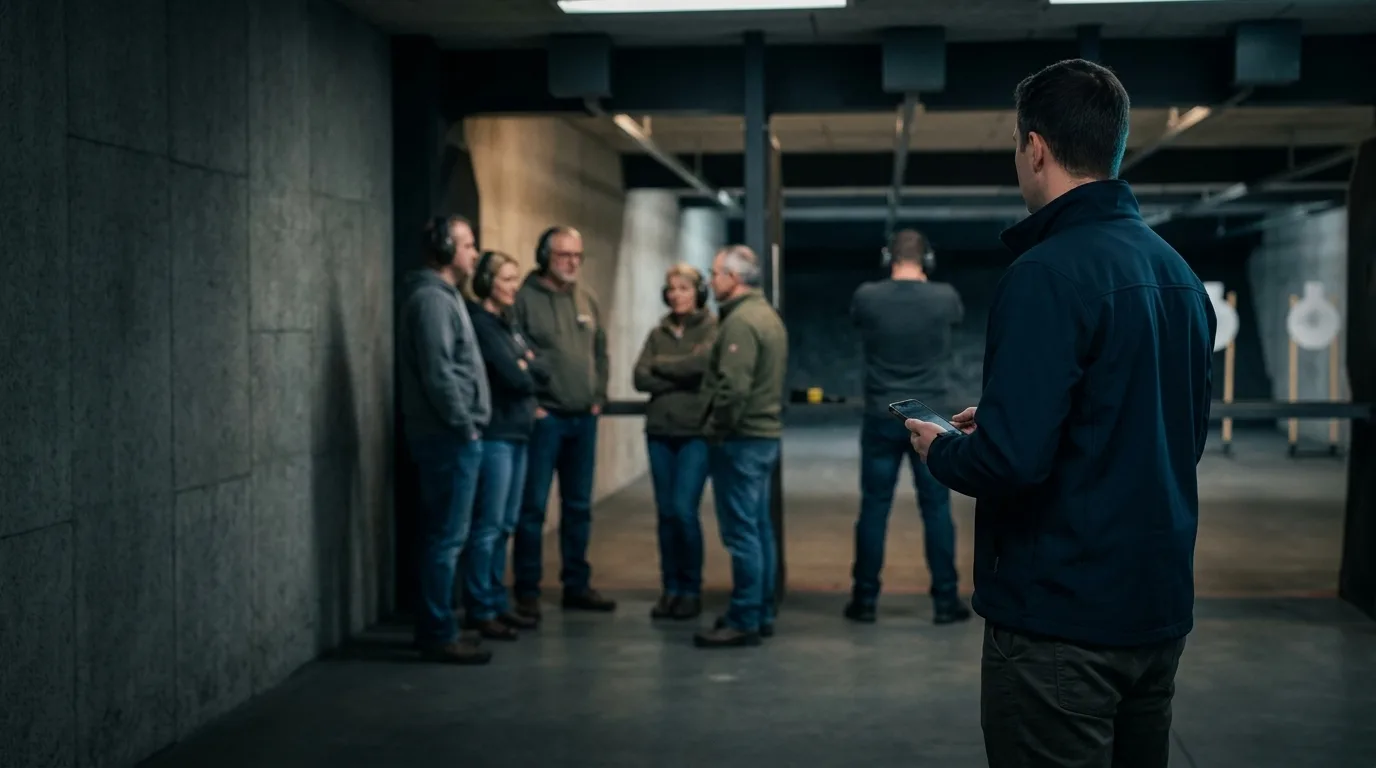
Electronic shooting targets are a topic that keeps coming up in conversations among club presidents, range managers, and anyone responsible for growing a shooting facility. The reason is straightforward: traditional paper and steel targets serve their purpose, but they don't meet the rising expectations of members — especially younger ones — who want instant feedback, competitive elements, and a modern training experience.
In this article, we'll show how electronic targets can transform the way a shooting range operates, simplify competition organization, and attract new members. We'll also compare specific solutions available on the market — from industrial-grade systems to mobile alternatives that don't require a six-figure investment.
Why Shooting Ranges Need to Modernize
The Attendance and Retention Problem
Many shooting clubs face the same challenge: recruiting new members and keeping existing ones active. A range with paper targets, no scoring system, and no competitive elements quickly becomes routine. After a few visits, enthusiasm fades and members show up less and less.
Research in sport psychology consistently shows that gamification and instant feedback are two of the most powerful tools for sustaining motivation. A shooter who sees their score, reaction time, and comparison with previous sessions after every hit has a reason to come back and try to beat their own record.
Rising Expectations
Today's shooters — especially those coming from airsoft, FPS gaming, or corporate team-building events — are accustomed to instant feedback. Walking to the target after every series, counting points by hand, and recording scores in a notebook feels like a relic of the past.
Equipping your range with electronic targets doesn't mean abandoning traditional training. It means adding a new layer that makes every visit more engaging.
Running Competitions Without the Headache
Anyone who has organized a shooting competition knows how much work a manual scoring system requires: judges at the targets, manual tallying, debates about borderline hits. An electronic scoring system eliminates subjectivity and drastically reduces the time needed to run a match.
Electronic Targets for Shooting Ranges — What's on the Market
The market for electronic shooting range equipment breaks down into three main categories.
Industrial-Grade Stationary Systems
Manufacturers like Megalink, SIUS, and Meyton offer precision systems with exact shot placement detection, integrated into the range's infrastructure. These are designed for large facilities — Olympic centers, military ranges, major sport clubs.
Pros: highest precision, compliance with ISSF regulations, full automation.
Cons: installation costs typically range from $15,000 to $100,000+, they require permanent infrastructure (wiring, mounting, power supply, maintenance), and reconfiguring lanes is difficult or impossible.
For a large competition range, this is the obvious choice. But for a community club with a limited budget, or an organization that runs training in the field — the barrier to entry is simply too high.
Mechanical Reactive Targets (Knock-Down, Gong)
Steel knock-down targets and gongs provide physical feedback (the target falls, you hear the impact), but they don't collect data. There's no scoring system, no statistics, no way to track progress. It's a step up from paper targets, but still far from a modern training experience.
Mobile Electronic Targets with an App
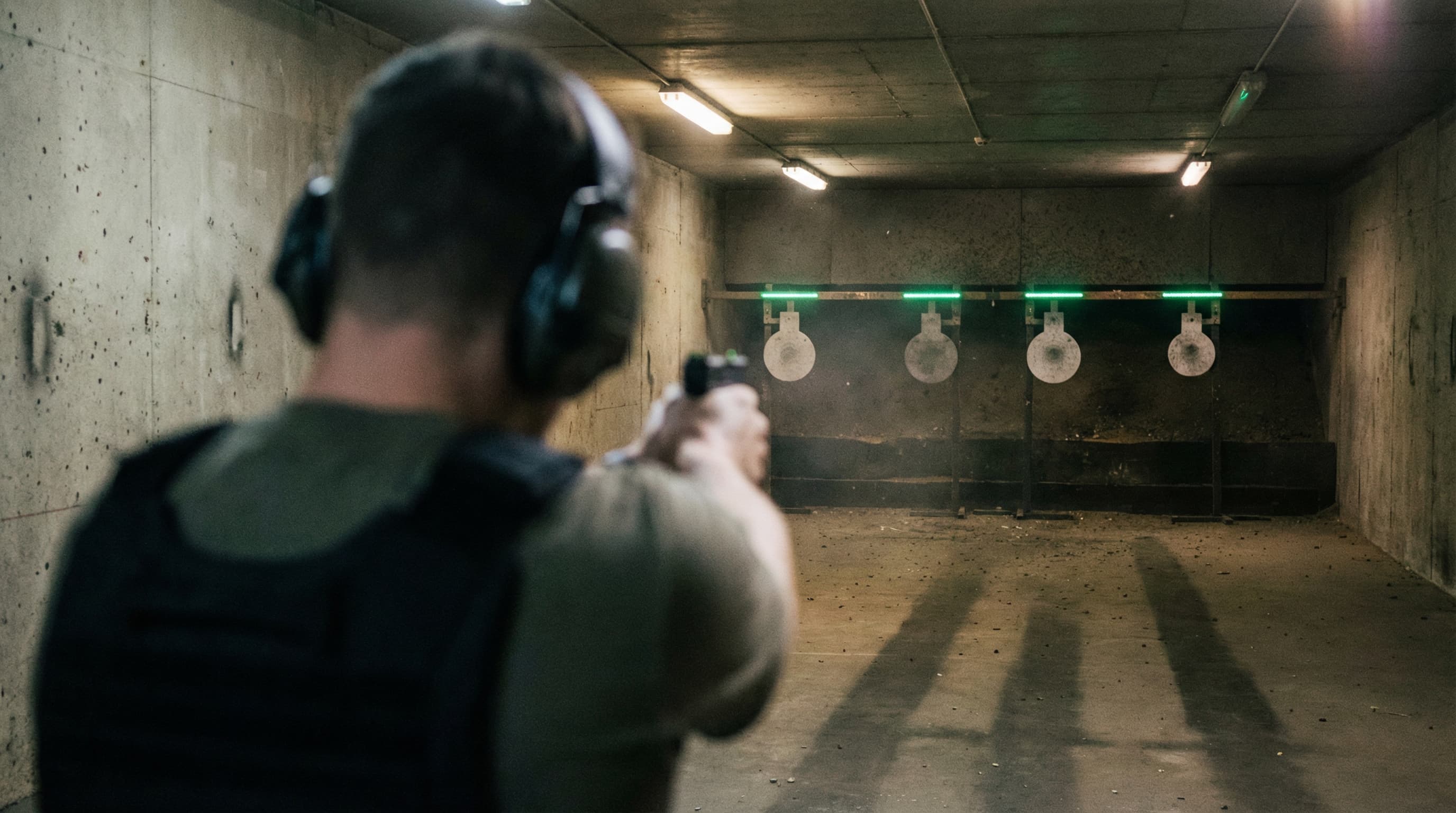
The third category is a relatively new segment: wireless electronic targets that communicate with a mobile app. They detect hits, record scores in real-time, and offer game modes or competition formats — without permanent infrastructure and without a budget that rivals stationary systems.
This is the category where Aimora fits in.
How Mobile Electronic Targets Change Club Operations
So what does this actually look like in daily club operations?
Running Competitions with Built-In Scoring
Scoring is one of the biggest headaches in competition organization. Manual counting is time-consuming and error-prone. Professional electronic systems are expensive.
Aimora offers a middle ground: every hit is registered automatically by a piezoelectric sensor that measures impact force, and the mobile app tallies points, tracks times, and maintains a real-time leaderboard. When the round ends, results are immediately available — no judges at the targets, no manual data entry.
Game modes especially useful for competitions:
- Duel — head-to-head competition between two shooters, each assigned targets in their own color. A visually exciting format, perfect for finals.
- Shoot-Off — hitting targets in a set sequence as fast as possible. Configurable for solo or multi-player formats.
- Time Attack — maximum number of hits within a set time. Simple to understand, easy to compare results across participants.
Running a shooting competition with an electronic scoring system stops being a logistical nightmare and becomes a smooth process you can repeat regularly — even weekly.
Making Training Sessions More Engaging
Clubs and shooting organizations often run regular training — for members, for youth programs, for educational initiatives. The problem is that traditional training on paper targets becomes monotonous after a few sessions, especially for younger participants.
Interactive shooting targets change the training dynamic:
- Instant feedback — the shooter sees results in the app immediately after each hit, without interrupting their series. This is a fundamental shift from walking to the target.
- Competitive elements — even during individual training, a historical score ranking motivates improvement.
- Scenario variety — 7 game modes (from simple practice through memory exercises to multi-player competition) mean every session can look different.
If you're interested in individual training with interactive targets, check out our guide: How to Improve Your Shooting Accuracy: 5 Proven Methods.
Portability — Training at the Range and in the Field
Many clubs and organizations run activities not only at a fixed range but also in the field — at camps, training retreats, and promotional events. A stationary electronic system stays at the range. Mobile targets travel with the instructor.
Aimora is wireless, battery-powered (Li-Ion, ~5 hours of operation), and magnetically mounted. Setting up at a new location takes minutes, not hours. Support for 1 to 7 targets simultaneously allows you to build anything from simple training stations to elaborate courses.
This opens new possibilities: demos at open days, sessions at schools, outdoor training — anywhere there's no fixed range infrastructure.
Looking for a scoring system for competitions and training?
Aimora is a wireless electronic target system with a mobile app — automatic scoring, 7 game modes, and real-time rankings. Starting from 99 EUR per target.
Discover AimoraHow Much Does It Cost — Investment Comparison
Budget is the deciding factor for most clubs and organizations. Let's compare realistic costs.
Industrial-Grade Stationary System
- Installation cost: $15,000 – $100,000+ (depending on the number of lanes and manufacturer)
- Requires: wiring, mounting, power supply, maintenance
- Best for: large sport ranges, military facilities
Mobile Electronic Targets (Aimora)
- Cost per target: ~99 EUR (complete kit: detector + LED indicator + 2 reflectors)
- Competition set of 4 targets: ~329 EUR
- Maximum configuration of 7 targets: ~626 EUR
- No installation, infrastructure, or maintenance required
- Mobile app: free (Android)
- Firmware updates: wireless, free (OTA via Bluetooth)
A cost difference of 50-100x doesn't mean one solution is better than the other. An industrial system offers higher precision and meets the standards of championship-level competitions. But for a club that wants to liven up weekly training, launch an internal league, or organize recreational competitions — mobile electronic targets deliver 80% of the effect at a fraction of the price.
Mini Case Study: What This Looks Like in Practice
Take a fictional shooting club called "Bullseye" — a range in a mid-sized city, 40 members, two part-time instructors. The club president has been saying "we need to change something" for years, but a $50,000 electronic scoring system isn't happening.
Before modernization:
- Training on paper targets, manual scoring
- Competitions twice a year (because organizing them is a major effort)
- Training attendance: 8-12 people
- New members: 2-3 per year
- Youth engagement: minimal
They buy 4 mobile electronic targets. Instructor Mike spends a weekend testing the system and comes in Monday with an idea for a "Bullseye League."
Three months later:
- Weekly league with automatic rankings — participants see results in the app immediately after each round
- Every session has a different format: Time Attack on Mondays, Duel on Wednesdays, Shoot-Off on Fridays
- At open days, targets set up in minutes, Duel mode draws spectators — several people sign up on the spot
- The instructor takes the portable kit to local schools for outreach sessions
- Training attendance: 18-25 people (members show up because they want to beat their personal best)
Investment: ~329 EUR. Return: higher attendance, more membership fees, easier grant applications (because there's something concrete to demonstrate at inspections), better visibility at events.
What to Look for When Choosing Electronic Targets
Regardless of which solution you choose, here are the key evaluation criteria.
Compatibility with Weapon Types
Not every system works with every type of firearm. Optical systems (laser, camera) have different requirements than physical impact detection. Aimora uses a piezoelectric sensor, which means compatibility with airsoft, air rifles, and firearms — it detects the physical impact of a projectile, regardless of type.
Scoring System and Data Collection
The fact that a target is "electronic" doesn't automatically mean it collects useful data. Ask about: does the system measure reaction time? Does it maintain rankings? Does it export results? The Aimora app records session history with times, hit counts, and impact force — data that an instructor can use to analyze participant progress.
Portability vs. Permanence
If you train exclusively at one facility and have the budget — a stationary system makes sense. If you need flexibility (events, field training, multiple locations) — portability is the priority.
Ease of Use
A system that nobody can operate is worthless. Evaluate: how long does setup take? Does it require training? Can an instructor without technical experience manage it? Aimora is designed for simplicity — Bluetooth pairing, app-based configuration, magnetic mounting. Setting up a 4-target kit takes a few minutes.
Updates and Development
Are you buying a product that will evolve, or a frozen version? Check whether the manufacturer offers firmware and app updates. Aimora supports wireless OTA updates — new game modes and improvements reach existing targets without hardware replacement.
How to Start Modernizing Your Range
If you're considering introducing electronic targets to your range, here's a pragmatic plan:
- Start with a small set — 2-4 targets are enough to test the concept during training and small competitions.
- Appoint a champion — one person in the club who learns the system and promotes it to members.
- Announce an internal league — weekly or monthly competitions with rankings. This is the fastest way to build engagement.
- Leverage events — open days, festivals, school sessions. Mobile targets are an excellent tool for promoting the club.
- Scale as needed — if the concept works, add more targets and expand your scenarios.
Upgrading your shooting range doesn't require a revolution. It requires one good idea and a tool that makes it possible.
Want to test Aimora at your club?
Wireless electronic targets with automatic scoring, game modes, and a mobile app. Perfect for training, competitions, and events. Starting from 99 EUR per unit.
Get in TouchSummary
Modernizing a shooting range with interactive electronic targets isn't a luxury reserved for large facilities with six-figure budgets. Thanks to mobile solutions like Aimora, even a small club or organization can implement an electronic scoring system, make training more engaging with competitive elements, and professionally organize competitions — at a fraction of the cost of industrial systems.
The key is to start: test it at one training session, observe the reaction, and build from there. Because a range where people aren't bored is a range they keep coming back to.